
Ordering custom jewelry pouches starts with a practical question: will the finished pouch hold your actual jewelry comfortably, close properly and present it consistently? A photograph can help you choose a look, but a wholesale specification needs measurements, construction details and a sample approval process.
For jewelry brands, wholesalers and packaging distributors, the checklist below turns an initial design idea into a clearer request for quotation. It applies to soft jewelry bags used for retail presentation, gifting or storage, with extra checks for pieces that need an inner panel or separate compartment.
1. Specify the jewelry before choosing the pouch size
Measure the item in the position in which it will be packed. Include the height of a raised ring setting, the width of a pendant, the length of earring posts and any display card. A necklace laid flat and a necklace wrapped around a panel need different amounts of space.
Ask the supplier to distinguish the finished outside dimensions from the usable inside dimensions. Seams, a folded flap and a drawstring channel can reduce the space available. Also specify whether measurements refer to an empty pouch laid flat or a filled, closed sample.
There is no single clearance allowance that works for every piece. Check the largest item in each proposed size group and the smallest item that could move around inside it. An oversized pouch can allow movement; a tight one can strain the closure or press against a setting.
2. Match the closure to the packing process
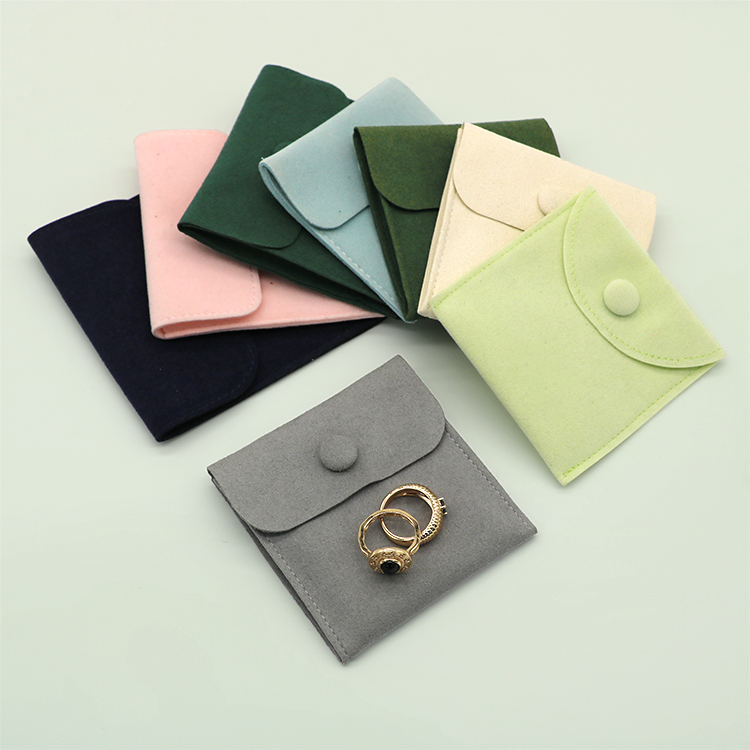
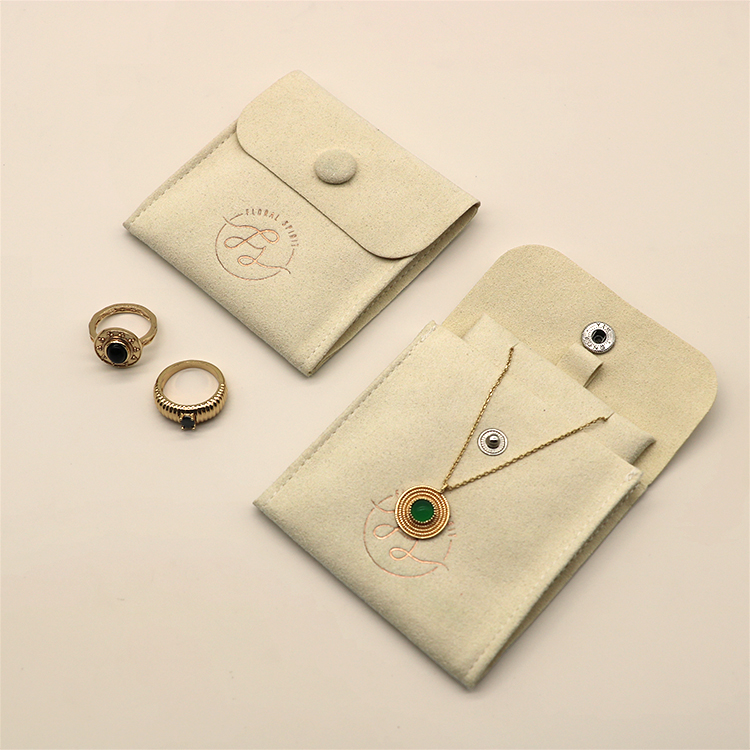
A flap pouch gives the packing team a defined opening and closing position. With a snap closure, inspect where the hardware sits relative to the jewelry. Check that the item does not rest against an exposed hard component when the pouch is closed.
A drawstring design gathers fabric at the opening. Evaluate the usable space below that opening and whether cords interfere with the jewelry or presentation card. Test the closure with the actual contents, rather than approving an empty pouch alone.
3. Decide whether an inner panel is needed
Loose chains, paired earrings and pendants may need more organization than an open pocket provides. Specify how the piece should be positioned and removed. A panel can help arrange a necklace, but its slots, edges and chain routing must suit the particular design.
For earrings, confirm how posts and backs are held and whether they can contact another piece. For a necklace, check that the chain remains arranged after the pouch is closed and reopened. If multiple items share one pouch, review a separator or individual compartments with the supplier.
For a travel-storage brief, the JYP009 roll-up jewelry pouch with tie closure offers a different format to compare with a small presentation pouch. Check the open layout and the filled, rolled-up size with the intended contents.
4. Confirm fabric and lining through a physical sample
Names such as velvet, suede-like and microfiber do not provide a complete material specification. Ask for the actual composition, surface finish, backing and lining of the proposed pouch. The photos here illustrate construction and presentation; they do not establish fiber content.
Inspect the sample for loose fibers, rough seams and color transfer. Agree a suitable evaluation method for the jewelry finish and intended use. Check dark and light fabric colors separately if both are part of the order.
A soft surface alone does not establish anti-tarnish performance. If you need a specific protective treatment, request documentation and testing relevant to the supplied material and storage conditions. Likewise, a fabric pouch alone does not provide rigid protection against shipping pressure. Assess the full shipping package for e-commerce orders.
5. Approve the logo on the chosen material
Provide vector artwork where available, along with the logo size, position and intended color. Ask which decoration methods suit the selected fabric. Fine lines, small lettering and placement near a seam need particular attention on the sample.
Approve a decorated sample in the selected pouch color before authorizing bulk production. Check readability, alignment and appearance after normal opening and handling. Logos visible in reference photos are design examples, not evidence of a customer relationship or an endorsement.
Explore JERL’s packaging customization options when preparing artwork and discussing the required finish.
6. Put the sample approval criteria in writing
Keep an approved reference sample and a dated specification. For each size and color, record the finished dimensions, agreed tolerances, closure, lining, insert and decoration. Ask how variations between production batches will be handled.
Before approving the sample, complete these checks:
- Fit: pack representative jewelry, including the largest setting or card.
- Closure: open and close the filled pouch and check pressure points.
- Interior: inspect seams, hardware contact and any insert edges.
- Presentation: check the logo and color under consistent lighting.
- Packing: test the pouch within the intended gift box or shipping package.
- Identification: agree how sizes, colors and quantities will be labeled in the delivery.
What to include in a wholesale quotation request
Send the jewelry type and measurements, reference photos, preferred closure, proposed pouch sizes, color choices, quantities by size and color, and any insert requirements. Add logo artwork, the intended use, delivery destination and target arrival date.
Ask the supplier to confirm material details, minimum order quantities, sampling costs, production timing, packing arrangements and shipping terms for that specification. These details vary by project and should be confirmed in the quotation.
For a broader comparison of bags and rigid packaging, see how to choose packaging for a jewelry brand.
Request a pouch sample review
Preparing a new jewelry collection or expanding your packaging range? Contact JERL Packaging with your item dimensions, reference pouch, quantities and logo artwork. We can review the requirements and confirm the proposed construction, sample arrangements and quotation details for your project.


